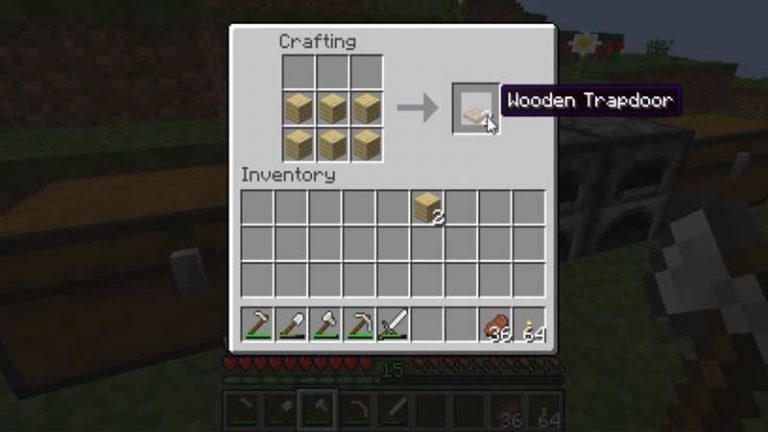
Okay, so, picture this: me, totally engrossed in my Minecraft world, meticulously building what I thought was the ultimate secret base. I had the hidden entrance, the redstone contraptions (that only sometimes worked, let's be honest), the whole shebang. Then I realized… I had no way to actually get in and out discreetly. Facepalm moment, right? Like designing a super-secure bank vault with no door. That’s when I realized I needed a badass trapdoor. And, naturally, I decided to over-complicate things by making it with Eclipse. Why? Because why not?
So, you want to make a trapdoor in Minecraft using Eclipse? You’re either incredibly brave, incredibly masochistic, or just really, really bored. Probably all three. Don't worry, I get it. I've been there. Let’s dive in!
Setting Up Your Eclipse Environment (The Boring But Necessary Part)
First things first, you’ll need to have Eclipse installed and configured for Minecraft modding. I’m not going to walk you through every single step of setting up your development environment – there are tons of great tutorials online for that. (Seriously, Google "Minecraft modding tutorial Eclipse" – you’ll thank me later.) But essentially, you need to:
- Install Eclipse (obviously).
- Install the Minecraft Forge MDK (Mod Development Kit).
- Import the Forge MDK into Eclipse as a Gradle project.
Once you’ve got that sorted, you’re ready to… write some code! shudders dramatically
Creating Your Trapdoor Block
Now for the fun part (or at least, the slightly less boring part). We need to create a new block that will function as our trapdoor. Start by creating a new class in your mod’s source code. Let's call it `BlockCustomTrapdoor.java` (original, I know).

This class will extend the `BlockTrapDoor` class from Minecraft. Here’s a basic outline:
public class BlockCustomTrapdoor extends BlockTrapDoor {

    public BlockCustomTrapdoor(Properties properties) {
        super(properties);
        // ... more code here ...
    }

    // Override methods to customize the trapdoor's behavior
}
See? It's already complicated. Just kidding (sort of). In the constructor, you’ll need to specify the properties of your block. This includes things like its material, hardness, and resistance to explosions. You can use the `Block.Properties` class to do this. For example:
public BlockCustomTrapdoor() {
        super(Block.Properties.of(Material.WOOD).strength(3.0F, 3.0F));
    }
This creates a trapdoor that is made of wood and has a strength of 3.0F. Feel free to experiment with different materials and strengths! Maybe a diamond trapdoor? Go wild! But also, maybe balance your game a little.

Registering Your Trapdoor Block
Creating the block is only half the battle. You also need to register it with Minecraft so that it actually appears in the game. This is typically done in your mod’s main class. You'll need to use the Forge event system to register your block. This involves subscribing to the `RegistryEvent.Register
Important side note: Make sure you handle thread safety correctly when registering your block! This is a common source of bugs and crashes. (Trust me, I've learned this the hard way… multiple times.)

Adding a Model and Texture
Okay, so now we have a block... but it looks like… well, nothing. It's an invisible block. Not very helpful, is it? We need to add a model and texture so that players can actually see our trapdoor. This involves creating JSON files for the block model and using an image editing program (like GIMP or Photoshop) to create a texture.
The JSON files define the shape and appearance of the block. You’ll need to create two JSON files: one for the block itself and one for the item model. These files tell Minecraft how to render the trapdoor. It can be a bit fiddly at first, but there are plenty of examples online to guide you.
The texture is simply an image file that is applied to the block. You can create your own texture or use one of the existing textures in Minecraft. Get creative! Maybe a trapdoor made of bacon? (Okay, maybe not bacon. But you get the idea.)

Testing and Debugging (The Inevitable Part)
Now comes the moment of truth: testing your trapdoor in Minecraft. Launch the game with your mod enabled and see if your trapdoor appears in the creative inventory. Place it down and see if it works as expected. Does it open and close? Does it connect to other trapdoors? Does it crash your game? (Hopefully not!) Prepare for lots of errors!
Debugging is an essential part of modding. Use Eclipse’s debugging tools to step through your code and identify any problems. Read the error messages carefully! They often provide clues about what’s going wrong. And, of course, don’t be afraid to ask for help on the Minecraft Forge forums or other modding communities.
Making a trapdoor with Eclipse is a bit more involved than just crafting it with some wood and hinges. But hey, you’re a modder now! Embrace the complexity! Good luck, and happy coding!
![How to make a trapdoor in Minecraft? [Complete Guide] - 👇Alucare](https://www.alucare.fr/wp-content/uploads/2024/11/www.alucare.fr-comment-faire-une-trappe-dans-minecraft-guide-complet-1-14.png)