
Okay, imagine this: I'm lost in my Minecraft world, again. Seriously, my sense of direction is worse than a chicken in a maze. I’d spent hours mining diamonds (finally!), and I knew I had built a safehouse nearby. But no, I wandered around, dodging creepers and zombies, clutching my precious diamonds like a life raft. It was then I realised, I needed something… better than just a wooden door. Something…secure. Like a secret code-protected entrance! Hence, the quest to understand the lever-based code door began. Anyone else ever feel hopelessly lost in their own Minecraft creations? Tell me I'm not alone!
So, you're ready to ditch the flimsy wooden doors and embrace the power of redstone? Excellent! We're going to build a lever-based code door. It sounds complicated, but trust me, with a bit of patience (and maybe a YouTube tutorial or two – no shame in that!), you'll be guarding your diamond stash like a pro in no time.
What you'll need:
Alright, let’s gather our supplies. This isn’t like crafting a wooden pickaxe; you’ll need a few more bits and pieces. Think of it as a fun redstone shopping spree!
- Stone or blocks of your choice (for the door frame and the mechanism housing)
- Iron Door (because, security!)
- Levers (the keys to your kingdom… or, you know, your storage room)
- Redstone Dust (the lifeblood of Minecraft electronics)
- Redstone Torch (for inverting signals and adding logic)
- Redstone Repeater (to strengthen signals over longer distances, think of them as redstone boosters!)
- A bit of space (you’ll need room to build the mechanism behind the door)
Don't worry if you don't have everything right away; just gather as you go. This is Minecraft; improvisation is key!
The Basic Setup: Laying the Foundation
First, build your door frame using your chosen blocks. Then, place your iron door inside the frame. Remember, iron doors require a redstone signal to open, which is exactly what our lever code will provide! This is crucial; a wooden door would be way too easy to break through – we want Fort Knox, Minecraft style!
![Minecraft - Tuto Redstone | Porte a code simple [E7] - YouTube](https://i.ytimg.com/vi/PcvvdiuUMR4/maxresdefault.jpg)
Now, behind the doorframe, build a small wall (or hide the mechanism inside an existing wall). This is where we'll place our levers. Decide how many levers you want for your code. I usually go with 4-6. More levers mean a more complex code, but also more possibilities for mistakes (speaking from personal experience!). Think about your own memory; can you remember an eight-digit code? I know I can't!
The Redstone Magic: Connecting the Levers
Place your levers on the wall, each one representing a digit in your code. Now comes the fun (and sometimes frustrating) part: the redstone wiring. This is where you’ll need to think logically about how the levers control the redstone signal.

Behind the levers, place blocks. On these blocks, place redstone torches. The idea is that when a lever is OFF, its redstone torch is ON. When the lever is ON, it cuts the power to the torch (inverting the signal – sneaky, huh?). This is how we’ll create a specific combination.
Connect the redstone torches with redstone dust. Then, run the redstone signal towards the iron door. You might need to use repeaters to keep the signal strong, especially if the distance is long. Redstone signals only travel a certain distance, so repeaters are your best friends here. Think of them as tiny redstone cheerleaders, boosting the signal onward!
The Logic Gate: Ensuring the Correct Code
Here's the tricky bit: you need to make sure the door only opens when the correct combination of levers is activated. This often involves using a NAND gate or similar redstone logic. This might sound complicated, but there are tons of tutorials online that explain this visually. Honestly, seeing it in action is way easier than me trying to explain it in words. (Google "Minecraft redstone NAND gate" – you won't regret it!)
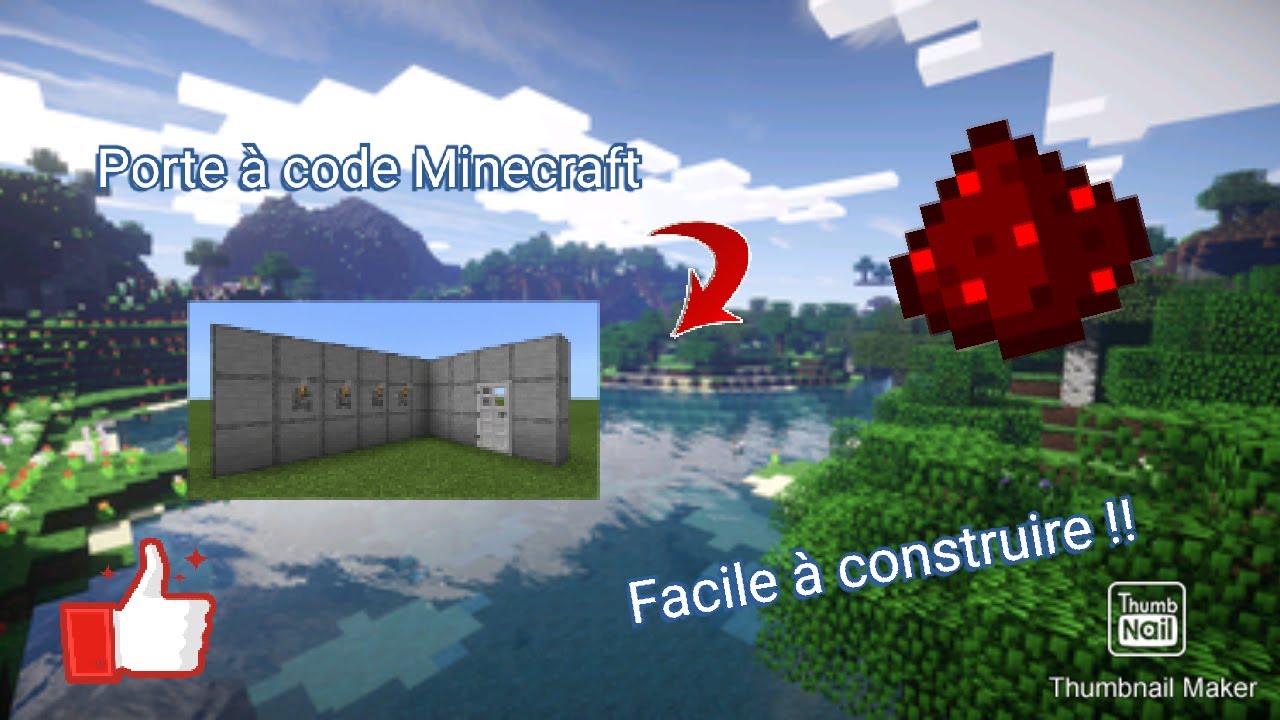
The basic principle is that the output of the logic gate (which controls the door) is only ON when the exact correct lever combination is entered. Any other combination, and the door stays firmly shut. This is what makes your code door secure.
Testing and Troubleshooting: The Inevitable Headaches
Once you think you have it all wired up, test, test, test! Flick the levers in different combinations and see if the door responds as expected. If not (and let's be honest, it probably won't the first time!), don't despair. Redstone troubleshooting is a rite of passage for every Minecraft engineer.

Check your redstone connections, make sure your torches are in the right places, and double-check your logic gate. Sometimes, it's just a single misplaced dust particle that's causing the problem. Trust me, I've spent hours chasing down phantom redstone bugs. It's all part of the fun… right?
Final Thoughts: Your Secure Sanctuary
Congratulations! You've built a lever-based code door in Minecraft. Now you can relax, knowing your diamonds (and your sanity) are safe behind your intricate redstone contraption. Feel free to decorate the area around the door to make it even more secure. Maybe add some pressure plates that trigger hidden traps for any unsuspecting intruders. You know, for extra security… and entertainment.
Now go forth and build amazing things! And try not to get lost in your own world. Good luck, and happy crafting!


![[TUTO]PORTE A CODE (super facile) Labo2Sabo - MINECRAFT 1.16.2 - YouTube](https://i.ytimg.com/vi/Dd9FwiAoPvc/maxresdefault.jpg)

![[TUTO] Minecraft 1.8 | Porte à code item frame - YouTube](https://i.ytimg.com/vi/-2XP8e-DPDk/maxresdefault.jpg)